Case Law Brief #2: 4th Amendment = Government Action
4th Amendment = Government Conduct: Burdeau v. McDowel (1921)
Case Overview
In Burdeau, private individuals unlawfully obtained McDowell’s papers and delivered them to federal prosecutors. Because the government had not participated in or directed the original taking, the Supreme Court held that the Fourth Amendment did not require the government to return the papers or prevent their use.
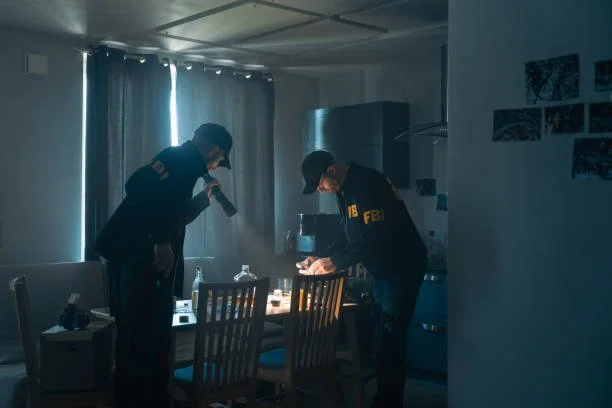
When in doubt, ask “Who directed the search?”
The Rule
Burdeau v. McDowell, 256 U.S. 465 (1921), establishes a foundational Fourth Amendment principle: the Fourth Amendment applies to government conduct. Evidence obtained through a purely private search does not become the product of a Fourth Amendment violation simply because it is later turned over to law enforcement.
“The Fourth Amendment gives protection against unlawful search and seizure to the people by their government.”
— Burdeau v. McDowell, 256 U.S. 465 (1921)
Key Takeaways for the Street Officer
Identify the Actor: Before analyzing a search under the Fourth Amendment, determine who conducted it. A purely private search generally is not governed by the Fourth Amendment.
Private Does Not Automatically Mean Government: A private citizen may independently obtain evidence and provide it to law enforcement without automatically converting that conduct into a government search.
Don't Become the Private Searcher: If officers direct, encourage, participate in, or significantly facilitate a private search, the constitutional analysis can change. Officers should not use a private party as a workaround for Fourth Amendment requirements.
Know the Scope: If a private party presents evidence to officers, officers should distinguish between what the private party actually exposed and what officers independently search or examine. Additional government examination can create a separate Fourth Amendment issue.
Other Laws Still Apply: Burdeau addresses the Fourth Amendment's application to government conduct. It does not make an otherwise unlawful private act legal or eliminate potential issues under state law, criminal law, civil law, or department policy.
When in doubt, Ask: "Who conducted the search?" The Fourth Amendment regulates government searches and seizures—but once law enforcement participates, directs, or expands the search, officers must evaluate their own conduct under the Fourth Amendment.
I hope this helps you while you’re on the job!
Stay sharp,
-Marcus, Team TacBook
Now you can access more resources anytime on our Team TacBook vault or the TacBook Mobile App! So, Be On the Lookout…
Check out our resources at TacBookUSA.com